

May 15, 2026
Insights
TLP Signals | Weekly Industry News
This week’s signals point to a clear shift: loyalty is moving closer to where customers actually make decisions. Not just points after purchase. Not just CRM journeys humming away in the background. The interesting activity is happening in booking flows, wallets, apps, payment credentials, stores, subscriptions and AI-powered commerce interfaces. The smarter brands are not treating loyalty as a standalone scheme anymore. They are turning it into infrastructure: a way to influence choice, reduce friction, grow frequency and protect the customer relationship before someone else owns it.
- Anouncement
- |
- Anouncement
- |
- Anouncement
This week’s signals point to a clear shift: loyalty is moving closer to where customers actually make decisions.
Not just points after purchase. Not just CRM journeys humming away in the background. The interesting activity is happening in booking flows, wallets, apps, payment credentials, stores, subscriptions and AI-powered commerce interfaces.
The smarter brands are not treating loyalty as a standalone scheme anymore. They are turning it into infrastructure: a way to influence choice, reduce friction, grow frequency and protect the customer relationship before someone else owns it.
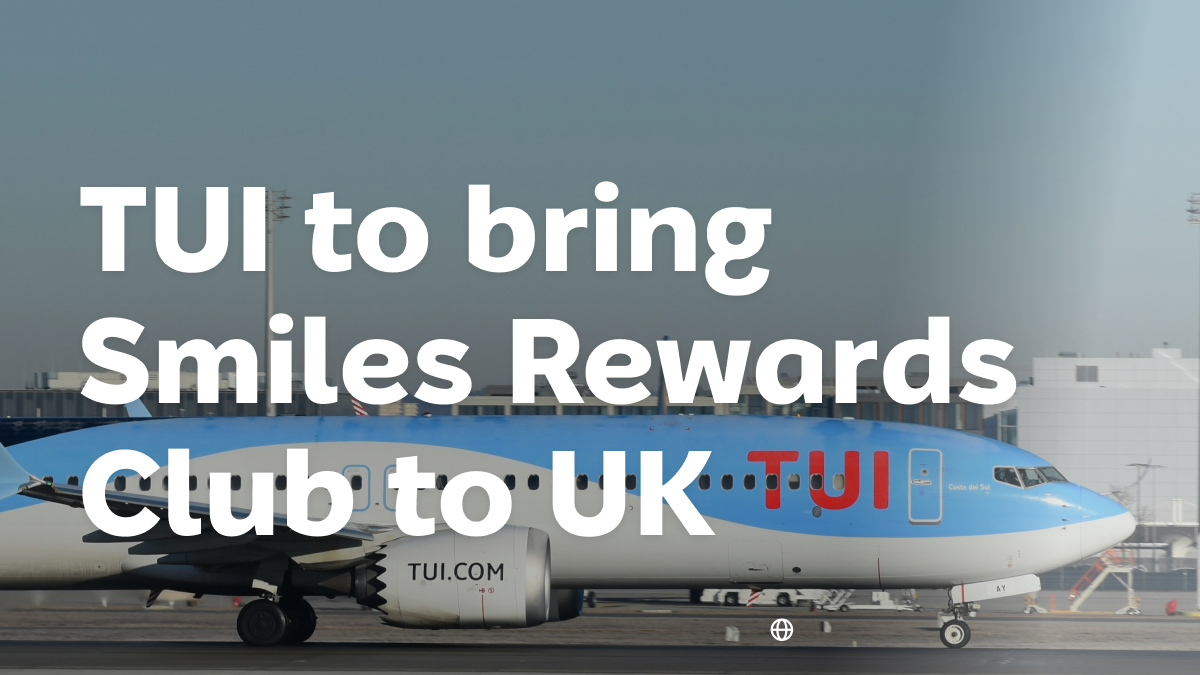
🇬🇧 TUI prepares to bring Smiles Rewards Club to UK customers
TUI is preparing to roll out its Smiles Rewards Club in the UK this summer or autumn, following a pilot in Finland. The programme will sit across flights, hotels, packages, cruises and experiences, with three levels unlocking increasingly valuable benefits.
What makes this interesting is not just that TUI is launching a loyalty scheme. It is that the group has openly linked the programme to engagement, traffic, conversion and lower distribution cost. That is the proper commercial lens.
For travel brands, loyalty is increasingly about keeping the customer inside the owned ecosystem before comparison sites, OTAs and paid search take another bite. TUI appears to be using Smiles as a way to make its own booking environment more valuable, more habitual and more defensible.
Why this matters
Travel loyalty is no longer just about points accumulation. It is becoming a direct booking strategy, a customer service strategy and a margin protection strategy rolled into one.
🇬🇧 Nectar and Merlin turn grocery points into family days out
Sainsbury’s Nectar360 has partnered with Merlin Entertainments, allowing Nectar members to use points for entry at more than 20 UK attractions, including Alton Towers, Legoland Windsor, Thorpe Park, Chessington, the London Eye and Warwick Castle.
This is a strong example of loyalty value moving beyond the core shopping mission. Grocery schemes already have frequency, data and scale. The next challenge is emotional relevance.
By letting members convert everyday shopping value into leisure experiences, Nectar is making the currency feel more useful in real life. That matters because customers rarely fall in love with points balances. They respond to what those points allow them to do.
Why this matters
The best loyalty currencies are becoming lifestyle currencies. Nectar is strengthening its role not just as a supermarket reward mechanic, but as a broader household value platform.
🇬🇧 Uber One leans into partner-funded subscription value
Uber One is running its second annual Members Days in the UK, with offers across food, travel and entertainment, including Disney+, McDonald’s, Joe & The Juice, German Doner Kebab, Avios and Boots Advantage Card-related rewards. Uber One has also passed five million UK members.
This is the subscription ecosystem play in full colour. Uber is not simply selling cheaper delivery or discounted rides. It is bundling external brand value into the membership to make the subscription feel harder to cancel.
The commercial logic is sharp. Uber gets retention. Partners get access to a high-frequency app audience. Members get the feeling that one subscription opens up multiple parts of their weekly life.
Why this matters
Subscription loyalty is becoming less about one brand’s benefits and more about ecosystem gravity. The stickier memberships will be the ones that feel useful across more customer moments.
🇬🇧 Five Guys launches a simpler rewards play
Five Guys has launched Five Guys Rewards in the UK, giving new members free fries as a welcome reward and future rewards when they scan their Rewards Pass and spend a minimum amount.
This is not trying to be clever for the sake of it. And frankly, that is the point. The proposition is immediate, simple and food-led.
In a category where frequency is valuable but customers are highly promiscuous, the first job of loyalty is not necessarily deep emotional engagement. Sometimes it is just getting the second visit. Five Guys seems to understand that a reward programme does not need a PhD in behavioural economics to work.
Why this matters
There is still power in simple, visible value. Not every loyalty programme needs tiers, missions and endless mechanics. Sometimes the best strategy is: join, scan, get something worth having.
🇸🇪 Klarna pushes further beyond BNPL into everyday financial relationships
Klarna reported Q1 revenue of $1 billion, GMV of $33.7 billion and 119 million active consumers, while continuing to expand beyond pure BNPL into deposits, debit and longer-term financing.
The bigger signal is that Klarna is trying to move from payment option to financial relationship. That matters because the company’s original advantage sat at checkout. Its next battle is about becoming a recurring consumer interface.
For merchants, this changes the role of BNPL-style providers. They are no longer just conversion tools. They are competing for customer identity, preference, credit behaviour and spending intent.
Why this matters
Payments businesses are increasingly behaving like loyalty platforms. The winner is not just whoever processes the transaction, but whoever owns the customer’s next decision.
🇺🇸 Amazon turns Alexa into a shopping interface
Amazon has launched Alexa for Shopping across Amazon.com and the Amazon app, replacing Rufus with an AI shopping assistant designed to answer product questions, compare items, set price alerts and support more personalised shopping journeys.
This is not just another AI feature. It is Amazon trying to reshape product discovery around conversation, memory and intent.
The loyalty angle is subtle but important. If customers start using AI assistants to shop, reorder, compare and decide, then the brands that win will be the ones whose data, content, value proposition and fulfilment logic are easiest for those assistants to understand and recommend.
Why this matters
The next loyalty battleground may not be the app or the email inbox. It may be the AI interface that decides which option gets surfaced first.
🇺🇸 Amperity pushes real-time customer context
Amperity has introduced a system designed to connect customer context, action and continuous learning, using a shared real-time layer of identity, behaviour and history.
The important bit here is operational, not buzzwordy. Many brands already have customer data. The problem is that the data often sits too far away from the systems making decisions.
Amperity is positioning around the gap between knowing something about a customer and being able to act on it quickly enough for it to matter. That is where a lot of loyalty and CRM programmes still fall down.
Why this matters
Customer data only becomes commercially useful when it changes an experience, offer or decision in the moment. Otherwise it is just expensive storage with a nicer dashboard.
🇺🇸 Citi reframes cards around affluent customers, co-brands and AI
Citi is leaning harder into affluent customers, co-branded cards and AI-driven personalisation, while positioning AI as an operating layer across cards, payments, servicing, underwriting and wealth.
This is another sign that card portfolios are being rebuilt around relationship depth rather than generic acquisition. Co-brands still matter because they connect financial products to lifestyle relevance, travel, retail and everyday spend.
The AI element is less interesting as a headline and more interesting as plumbing. If banks can use AI to improve servicing, underwriting, offer timing and portfolio engagement, rewards cards become more adaptive commercial engines.
Why this matters
Card loyalty is not disappearing. It is being reworked around better segmentation, stronger partners and smarter lifecycle management.
🇺🇸 Retail stores become data and fulfilment hubs
PYMNTS reports that major US retailers including Walmart, Target and Dollar General are investing heavily to connect physical stores more tightly with digital commerce, fulfilment and customer experience systems. It also cites research showing customer satisfaction rises significantly when shoppers use digitally assisted in-store experiences.
The store is no longer just a place where a transaction happens. It is becoming a data capture point, service hub, fulfilment node and experience layer.
For loyalty teams, this matters because the physical store still creates some of the richest behavioural signals. The challenge is joining those signals to digital identity, offers, inventory and payments without making the customer feel like they are wrestling a broken self-checkout machine from 2009.
Why this matters
Omnichannel loyalty only works when the store is properly connected. Otherwise customers experience the brand as one company online and another company in real life.
The conversation doesn't stop here.
Join the people bulding & debating this - in real time.

TLP is a collective-led platform for people working in customer loyalty, CX, CRM and marketing.