

September 4, 2026
Insights
The Loyalty Stack Is Getting Rewired
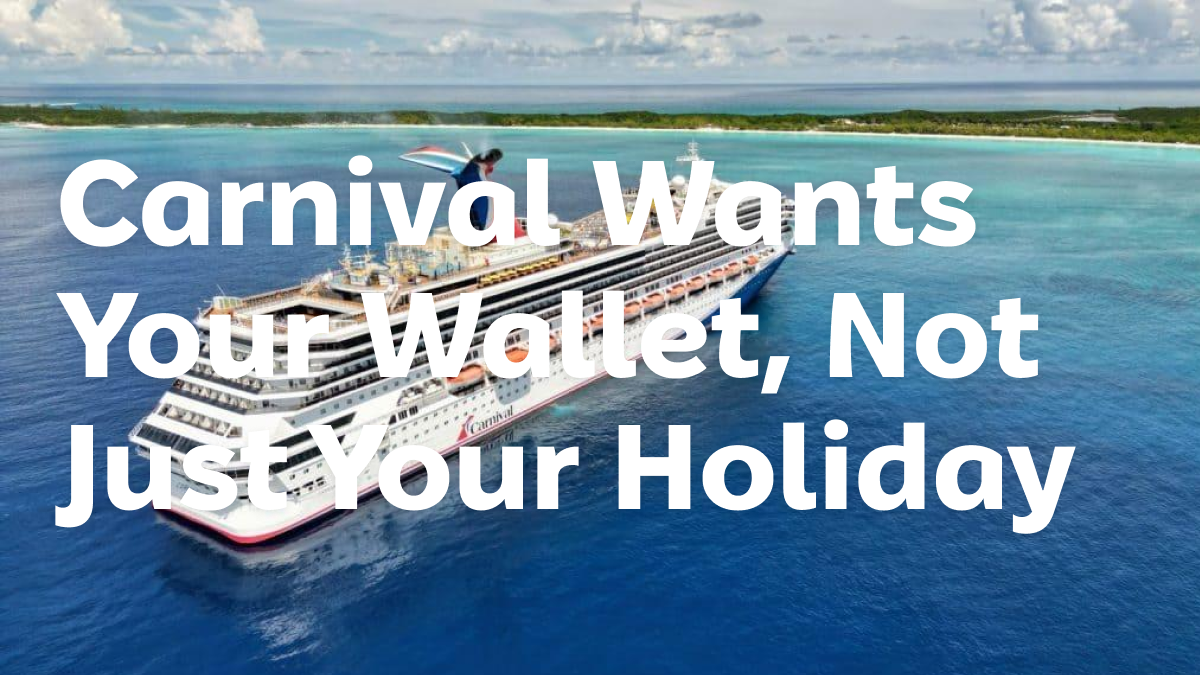
Carnival wants your wallet, not just your holiday. This week, we look at how loyalty, payments and customer infrastructure are converging — and what it means for the brands trying to own more of the customer relationship.
- Anouncement
- |
- Anouncement
- |
- Anouncement
Customer loyalty is becoming increasingly difficult to separate from the underlying transaction.
This week’s stories point in the same direction: rewards are moving closer to payments, payments are becoming part of the proposition rather than simply checkout infrastructure, and financial products are increasingly being designed around customer engagement.
The more interesting shift is happening underneath the product announcements. Companies are trying to own more of the customer relationship — from the moment money moves, to how customers earn, redeem, finance and experience value.
🇺🇸 Carnival Turns Everyday Spend Into Cruise Loyalty
Carnival has officially moved its loyalty programme from VIFP to Carnival Rewards, alongside the launch of a new co-branded Mastercard with Barclays. The new card allows customers to earn both points and status through everyday spending, with enhanced earning on Carnival purchases as well as groceries and restaurants.
That is more strategically interesting than a simple programme refresh. Carnival is trying to remove the boundary between travel loyalty and everyday financial behaviour. Customers no longer have to be on a ship, or even booking a cruise, to be participating in the ecosystem.
The card effectively extends the cruise brand into the customer’s wallet. And because status can also be earned through card spend, the relationship becomes more continuous rather than concentrated around the relatively infrequent moments when someone actually travels.
Why this matters
The strongest travel loyalty programmes increasingly look less like points schemes and more like customer ecosystems. The wallet is becoming another loyalty channel.
🇬🇧 HSBC Puts Lifestyle Loyalty Inside the Banking App
HSBC UK has launched Premier Lifestyle, a digital lifestyle and loyalty proposition for more than one million eligible Premier customers, powered by Ten Technologies. Customers can access travel, restaurants, entertainment and experiences directly through the HSBC mobile banking app using single sign-on.
The important part isn't simply the catalogue of benefits. It's the distribution.
Rather than asking customers to visit a separate loyalty environment, HSBC is putting lifestyle value directly inside the place customers already use to manage their money. That creates a much more interesting proposition for premium banking: the bank becomes a gateway to experiences, not just a place to hold and move money.
It also shows where financial-services loyalty is heading. Benefits increasingly need to feel useful and embedded, rather than looking like another points balance customers have to remember exists.
Why this matters
For banks, loyalty may increasingly be about owning more of the customer's lifestyle, not just rewarding financial activity.
🇬🇧 Rentd Makes Rent a Loyalty Transaction
UK fintech Rentd has launched a rewards banking app that turns rent payments into points redeemable for flights, hotels and everyday spending. Users can earn through rent as well as debit-card spending, with travel and loyalty infrastructure provided by Odynn and a merchant network supplied by Wildfire Systems.
The proposition is clever because it starts with something customers cannot easily avoid: rent.
Traditional loyalty programmes generally compete for discretionary spend. Rentd starts with one of the largest recurring financial commitments most customers have and attaches an aspirational reward proposition to it.
That changes the psychology of the transaction. The customer isn't simply paying rent; they are progressing towards something else. It is a reminder that loyalty doesn't necessarily have to be attached to a retail purchase to create engagement.
Why this matters
The next generation of loyalty opportunities may come from reframing unavoidable transactions as moments of value creation.
🇺🇸 Revolut Takes Another Step From Fintech to Full-Service Bank
Revolut has received conditional approval from the US Office of the Comptroller of the Currency for a national bank charter, taking it closer to launching a fully fledged US bank in 2027. The proposed operation is expected to offer checking accounts, loans, credit cards and foreign exchange services, with Revolut planning around $95 million of initial capital investment.
The strategic significance is bigger than the licence itself.
Revolut began by solving specific financial pain points — particularly around foreign exchange and international spending — and has progressively expanded the relationship. Banking infrastructure now becomes another piece of a much broader customer ecosystem.
That matters for loyalty because Revolut isn't trying to win one financial product at a time. It is trying to increase the number of financial jobs it can perform for the same customer.
Why this matters
Customer loyalty becomes much harder to dislodge when a brand moves from being a useful product to becoming the customer's financial operating system.
🇮🇳 India Is Preparing for Payments Made by AI Agents
India is developing a framework that would allow AI agents to make small digital payments through UPI without requiring customers to approve every individual transaction. The proposed system would use controls such as spending limits, identity checks and delegated payment permissions.
This is one of the more commercially significant developments in agentic commerce because it moves the discussion beyond AI helping customers decide what to buy.
The agent could eventually become the actor making the transaction.
That creates a very different customer relationship. Brands may increasingly need to convince not only the human customer but the software acting on their behalf. Price, trust, preferences, previous behaviour and programme benefits could all become inputs into an automated purchasing decision.
Why this matters
If agents start making purchases, customer loyalty may need to become machine-readable. The brand that wins may be the one whose value proposition an agent can understand and optimise for.
🇸🇬 SHOPLINE Embeds Instalments Into Its Commerce Platform
Commerce platform SHOPLINE has selected Splitit to embed card-linked instalment payments directly into its platform, giving its 700,000-plus merchants access to instalment functionality without requiring a separate payment integration.
The interesting story here is distribution rather than BNPL itself.
Payment functionality is increasingly being absorbed into the platforms merchants already use to run their businesses. The payment provider doesn't necessarily need to win the merchant directly if it can become infrastructure inside the merchant's existing commerce stack.
It also keeps the merchant relationship intact: customers remain inside the branded checkout rather than being pushed into a separate financing experience.
Why this matters
Commerce platforms are becoming distribution engines for financial products. The winning infrastructure providers may be the ones that disappear most effectively into the existing customer journey.
🇺🇸 AppCard Connects Grocery Loyalty Directly to Payment Rails
Grocery loyalty platform AppCard has selected Modern Treasury to provide payment infrastructure for its growing offering to independent grocers. The integration will support account-to-account payments, compliance, accounts and ledgering across a network serving more than 3,300 grocers.
This is exactly the sort of development that can look like payments infrastructure news but is actually loyalty news.
AppCard's proposition already sits around personalised offers, digital coupons and SKU-level shopper analytics. Adding payment infrastructure gives it another connection point to the transaction itself.
That creates the possibility of a much tighter relationship between what a retailer knows about a customer and what happens when that customer actually pays.
Why this matters
The line between loyalty platform and payments platform is getting thinner. Owning the transaction creates significantly richer opportunities for customer intelligence and engagement.
🇺🇸 Alchemer Moves Customer Feedback From Insight to Action
Alchemer has launched Iris, an AI-native customer feedback and intelligence platform designed to connect surveys, reviews and other listening channels with workflow and action. The platform can surface insights, trigger follow-ups and respond to reviews while moving work into the systems teams already use.
The interesting part isn't that another CX company has added AI.
It's that the proposition is explicitly about shortening the distance between hearing something and doing something about it. That distinction matters because many organisations have accumulated enormous volumes of customer feedback without creating an equally effective mechanism for acting on it.
The commercial opportunity is therefore less about collecting more feedback and more about operationalising the feedback companies already have.
Why this matters
CX maturity increasingly depends on closing the loop, not producing another dashboard explaining what customers think.
🇺🇸 PayPal's Failed $53bn Deal Raises a Bigger Checkout Question
Reports that an Advent International and Stripe consortium walked away from a proposed $53bn acquisition of PayPal have put the spotlight back on PayPal's position in a rapidly changing payments market. The reported deal valued the company at around $60.50 a share, while PayPal continues to face growing competition in branded checkout from Apple Pay and Shop Pay.
The bigger strategic issue is control of the checkout relationship.
Payment is becoming increasingly valuable because it is one of the few moments where a merchant can observe intent, transaction value and customer behaviour simultaneously. Whoever owns that layer has an opportunity to influence what happens before, during and after the purchase.
PayPal's challenge is therefore not simply defending a payments product. It is defending its relevance as the commerce stack around it becomes increasingly integrated.
Why this matters
Checkout is no longer just the final step in commerce. It is becoming a strategic customer relationship layer.
The signal underneath the signals
This week's strongest developments aren't really about points, cards or AI in isolation.
They're about ownership of the customer relationship.
Carnival is extending loyalty into everyday spending. HSBC is bringing lifestyle benefits into banking. Rentd is turning rent into rewards. AppCard is moving loyalty closer to payment infrastructure. Revolut is expanding from fintech product into financial ecosystem.
The common thread is simple: the most valuable customer relationships are being built at the intersection of transaction, data, utility and reward.
That is where loyalty gets considerably more interesting.
The conversation doesn't stop here.
Join the people bulding & debating this - in real time.

TLP is a collective-led platform for people working in customer loyalty, CX, CRM and marketing.