

September 18, 2026
Insights
The loyalty ecosystem is getting bigger — and harder to keep separate
This week, TLP Signals looks at how loyalty is moving beyond points and programmes. From TUI’s new Smiles proposition to smarter payment ecosystems, customer-led rewards and the rise of agentic commerce, the lines between loyalty, CX, payments and the wider customer relationship are becoming increasingly blurred.
- Anouncement
- |
- Anouncement
- |
- Anouncement
TLP Signals
The loyalty ecosystem is getting bigger — and harder to keep separate
The most interesting loyalty moves this week are not really about points.
They are about what happens when loyalty starts connecting with everyday spending, travel, payments, community and the wider customer relationship. TUI has put 800,000 customers into its new UK loyalty proposition before the programme has even properly got going. WestJet is connecting coffee purchases with future flights. Lidl is giving its app users a say in where £500,000 of community funding goes.
At the same time, payments infrastructure is moving closer to the customer relationship. Mastercard is pushing digital wallets towards a more interoperable model, while Verifone has found consumers actively combining multiple rewards schemes at the point of payment.
The direction of travel is becoming clearer: loyalty is increasingly less about running a rewards programme and more about owning the moments, ecosystems and infrastructure around the customer.
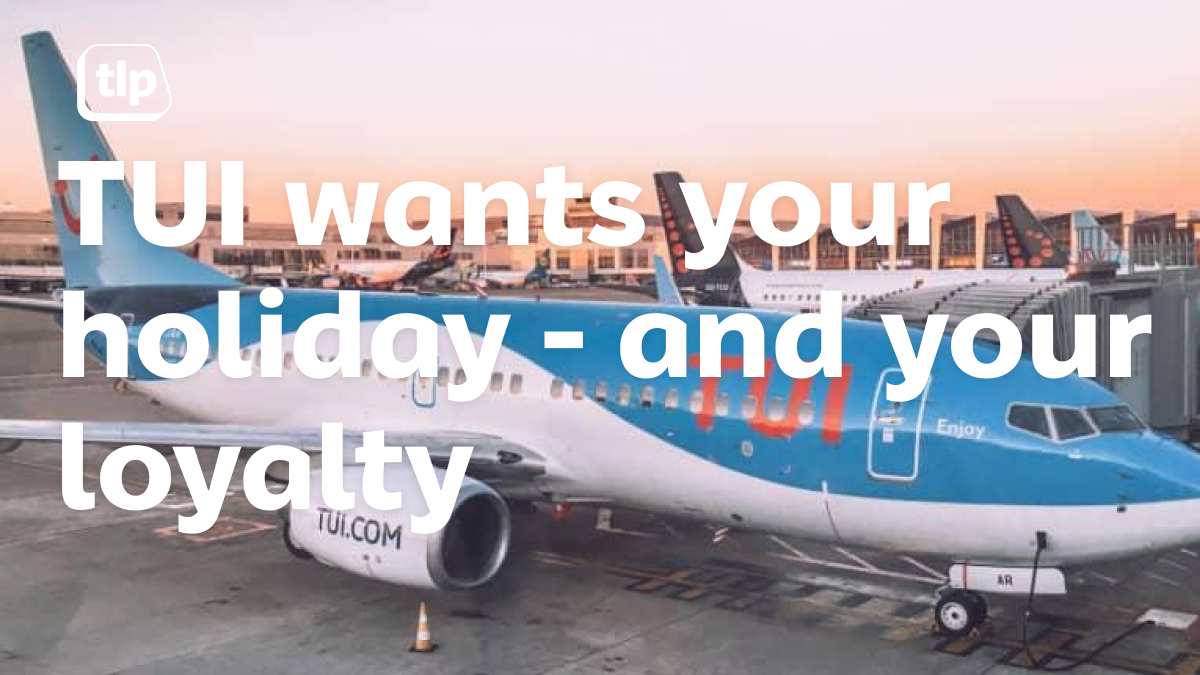
🇬🇧 TUI launches Smiles with 800,000 UK customers already signed up
TUI has officially launched TUI Smiles Rewards Club in the UK and Ireland, with around 800,000 UK customers already signed up.
The proposition goes well beyond a conventional points mechanic. Members receive holiday savings, TUI Musement discounts, partner offers, games, prizes and enhanced service benefits. TUI also says the programme will help it understand what customers value, creating the potential to use that insight across future offers and holiday experiences.
That is the more interesting part. TUI is not simply adding a loyalty layer to its existing holiday business; it is creating a customer data and engagement layer across the wider travel journey.
Why this matters
The early scale is notable, but the bigger opportunity is what TUI can do with the relationship once the customer is inside the ecosystem. The real test will be whether Smiles becomes a meaningful behavioural engine rather than another promotional channel.
🇨🇦 WestJet and Tim Hortons turn everyday coffee into travel currency
WestJet and Tim Hortons have announced a partnership that will eventually allow Tims Rewards and WestJet Rewards members to link their accounts and earn WestJet points from eligible Tim Hortons purchases.
The loyalty element arrives in 2027, but the strategic logic is already clear. A routine coffee purchase becomes connected to a much higher-value customer aspiration: travel.
It is also a useful reminder that strong loyalty ecosystems do not necessarily need another new brand or another new currency. They can connect existing behaviours and make each programme more useful because of what sits around it.
Why this matters
The strongest partnerships often work because the behaviours already exist. Customers do not have to change what they do; the brands simply make that behaviour more valuable by connecting the ecosystems.
🇺🇸 DSW redesigns loyalty around control, not automatic rewards
US footwear retailer DSW has launched a new VIP loyalty proposition called “Rewards at the Ready”, with three tiers: Club, Gold and Elite.
One of the notable changes is giving customers more control over when they redeem rewards rather than automatically issuing them. The programme also introduces member-only offers, surprise “MyPerk Drops”, free shipping and rewards linked to behaviours such as donating shoes.
The mechanics are familiar, but the framing is different. DSW is treating flexibility and perceived control as part of the value proposition rather than simply increasing the amount of reward available.
Why this matters
Loyalty economics are not only about how much value a brand gives away. They are also about how useful, flexible and psychologically relevant that value feels. Giving customers control can make the same underlying reward structure feel materially more valuable.
🇺🇸 Verifone finds consumers are stacking loyalty at the checkout
Verifone has analysed more than 590 million fuel transactions across the US summer and found that the share of purchases combining multiple loyalty or discount programmes increased 23%, reaching 0.53% of fill-ups in the final weeks of the summer.
It is a small percentage, but the behavioural signal is interesting. Customers are not necessarily loyal to one programme in isolation. They are increasingly looking for the best combination of available benefits at the point of payment.
Verifone says consumers using multiple programmes also made larger average fuel purchases and saved more per transaction than customers using a single programme.
Why this matters
The customer does not see loyalty programmes as isolated corporate assets. They see a stack of available value. That creates an increasingly important question for loyalty teams: are you designing for loyalty to your brand, or for your place within a customer's broader value ecosystem?
🇬🇧 Lidl gives loyalty members a voice — literally
Lidl is giving Lidl Plus users the opportunity to decide how £500,000 of community funding will be distributed.
From 24 September, members will be able to vote through the app for one of five local causes in their area. The five shortlisted causes will all receive funding, with the final allocation influenced by customer voting.
This is a different use of the loyalty relationship. The app is no longer simply a place to surface discounts and offers; it becomes a mechanism for participation and local decision-making.
Why this matters
It demonstrates another route for loyalty beyond transactional reward. Giving members influence can create a different kind of emotional value — particularly when the outcome is tangible and local. The interesting question is whether these experiences become a permanent part of loyalty design or remain occasional engagement campaigns.
🇺🇸 Mastercard wants digital wallets to become more connected
Mastercard has launched Wallet Pay, a portfolio of solutions designed to help digital wallets operate more interoperably across contactless, QR and online payments.
The company says more than 4.3 billion people globally now use digital wallets, with usage expected to exceed 6 billion by 2030. The new infrastructure is being adopted by a range of wallet providers across different markets.
The strategic shift is important. Wallets are becoming more than a place to store payment credentials. They increasingly sit at the intersection of payment, identity, offers and everyday financial behaviour.
Why this matters
Payments infrastructure is becoming part of the customer experience layer. As wallets become more capable and more interoperable, the distinction between “payment experience” and “loyalty experience” becomes increasingly difficult to maintain.
🇸🇬 Circle buys Tazapay to expand the infrastructure behind cross-border payments
Stablecoin company Circle is set to acquire Singapore-based cross-border payments infrastructure company Tazapay for $400 million in stock.
Tazapay brings payment rails, banking relationships and more than $25 billion in annualised payment volume across more than 100 markets. Circle says around 60% of that volume already incorporates stablecoins.
This is less about a shiny new consumer proposition and more about the infrastructure underneath global commerce. Cross-border payments remain fragmented, and businesses increasingly want transactions to move across markets without forcing customers through increasingly complex payment journeys.
Why this matters
Customer experience is often constrained by infrastructure customers never see. As payments companies consolidate rails, wallets and settlement capabilities, the commercial battle increasingly moves underneath the interface.
🇬🇧 The Entertainer brings its digital and physical customer journey together
UK toy retailer The Entertainer has appointed THG Commerce as its digital commerce partner in a multi-year agreement to build and operate its next-generation digital experience.
The ambition is to make discovery and purchasing easier across online and in-store journeys, serving families, gift buyers and the growing adult toy and collectibles market.
The important point is that the transformation is being positioned around the customer journey rather than simply a website rebuild. The Entertainer is trying to create a more connected commerce experience as the boundaries between browsing, discovery and purchase continue to blur.
Why this matters
Commerce platforms increasingly determine the quality of the customer relationship. The brands that treat digital infrastructure as a CX capability — rather than simply an IT project — have more opportunity to connect acquisition, conversion and retention.
🇺🇸 HubSpot and OpenAI push CRM further into the customer workflow
HubSpot and OpenAI have deepened their partnership, including a new CRM integration with ChatGPT Ads that allows customers to build, manage and measure campaigns from within HubSpot.
The bigger development is the continued movement of CRM context into the places where people actually work. HubSpot says its ChatGPT connector has become its most popular CRM integration.
This matters because CRM has historically been a system businesses consult. The emerging model is different: customer context increasingly travels with the workflow and becomes available directly inside the tools used to make decisions and execute activity.
Why this matters
The strategic question is moving from “How good is our CRM data?” to “Where does that customer context actually become useful?” The winners will not necessarily have the biggest CRM database; they will be the businesses that turn customer intelligence into action with less friction.
🇦🇪 Mastercard and Trip.com put agentic commerce into travel
Mastercard and Trip.com are showcasing an AI-powered booking experience using TripGenie and Mastercard's agentic commerce technology.
The proposition allows customers to search, research, compare and ultimately complete purchases through an AI agent, with Mastercard's infrastructure designed to support authorised transactions.
This is one of the more commercially interesting AI developments because it changes the interface through which commerce happens. The customer may no longer begin with a retailer, airline or hotel website. They may begin with an agent that decides which options to surface.
Why this matters
If agents become a meaningful route into commerce, loyalty has a new problem to solve. The question is no longer simply how to persuade the customer to choose your brand. It is how your brand, proposition and customer value are represented when an intermediary is making the choice on the customer's behalf.
The signal
The strongest loyalty developments this week share one characteristic: they are expanding the definition of what loyalty actually is.
It can be a holiday platform, a coffee purchase, a payment wallet, a supermarket app, a community decision or an AI-mediated transaction. The common thread is not points. It is access to a customer relationship that can extend beyond the original transaction.
That is where the strategic value is moving.
TLP Signals
Customer loyalty, CX, CRM, payments and the strategies connecting them.
The conversation doesn't stop here.
Join the people bulding & debating this - in real time.

TLP is a collective-led platform for people working in customer loyalty, CX, CRM and marketing.