

May 8, 2026
Trends
TLP Signals: Loyalty Is Moving Closer to the Transaction
This week’s signals are less about shiny new mechanics and more about where customer value is being repositioned.Loyalty is being pulled into payments, travel, subscriptions, service recovery and everyday platform behaviour. The strongest brands are not just asking customers to join another programme. They are trying to make themselves harder to leave.
- Anouncement
- |
- Anouncement
- |
- Anouncement
This week’s signals are less about shiny new mechanics and more about where customer value is being repositioned.
Loyalty is being pulled into payments, travel, subscriptions, service recovery and everyday platform behaviour. The strongest brands are not just asking customers to join another programme. They are trying to make themselves harder to leave.
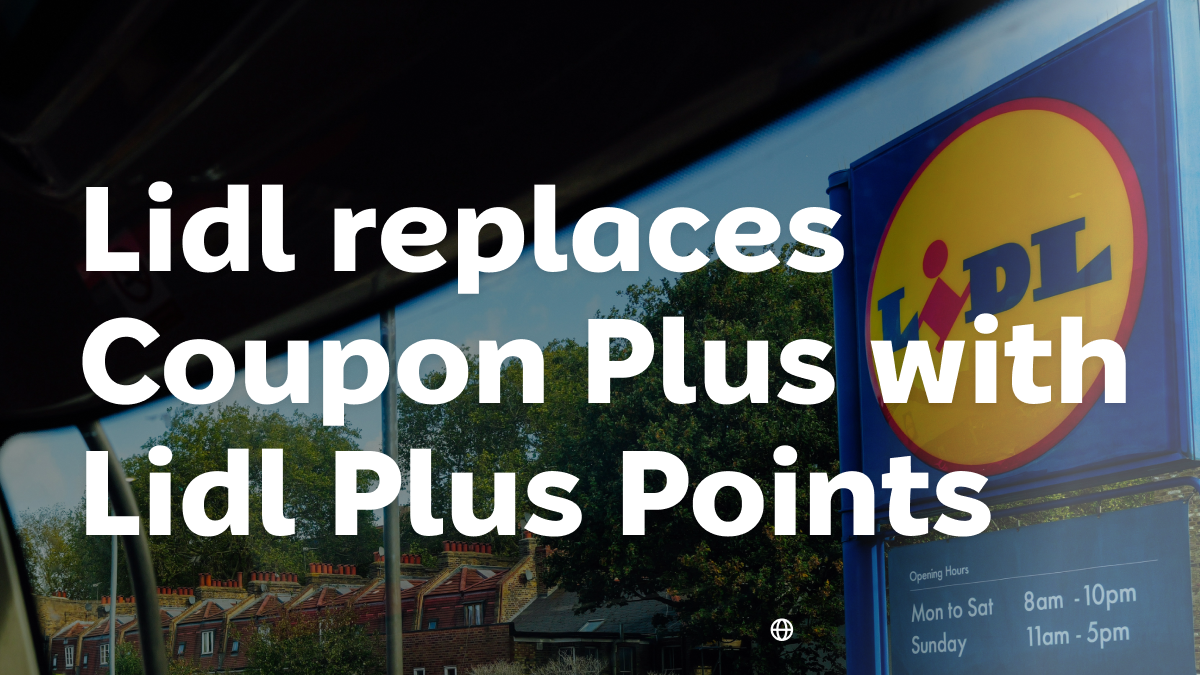
🇬🇧 Lidl replaces Coupon Plus with Lidl Plus Points
Lidl UK has replaced its Coupon Plus model with Lidl Plus Points, moving from monthly spend-threshold freebies toward a points-based rewards structure. The new system launched on 5 May 2026 and allows customers to collect points and redeem them for tailored rewards, including discounts and free products.
Commercially, this is Lidl trying to make its loyalty model more flexible and data-led. But the reaction also shows the danger of removing benefits customers already mentally treat as “theirs”. In grocery, loyalty value is judged brutally. If shoppers feel the new system gives them less certainty, the narrative can turn quickly.
Why this matters
This is a reminder that loyalty changes are not just product updates. They are psychological contract changes. Take away a simple, loved benefit and customers will measure the new version against what they lost, not what the brand says they gained.
🇦🇺 Flight Centre launches World360 Rewards
Flight Centre Travel Group has launched World360 Rewards, a new travel loyalty programme built around a “double-dip” proposition. Members can earn World360 points while still collecting airline and hotel loyalty points on eligible bookings.
That is smart positioning. Flight Centre is not trying to beat airline schemes at their own game. It is creating a layer above them, focused on the broader trip rather than the flight alone. For a travel retailer, that is where the customer relationship can become more defensible.
Why this matters
Travel loyalty is becoming less about one brand owning the whole journey and more about who can sit across the journey intelligently. Flight Centre is using loyalty to protect relevance in a market where suppliers, OTAs and platforms all want the same customer.
🇺🇸 Uber adds hotel bookings through Expedia
Uber is adding hotel bookings through Expedia, with access to more than 700,000 properties. Uber One members get hotel-related perks, including discounts and Uber credits on bookings.
This is not just a travel feature. It is Uber stretching the use case of the app beyond transport and food into broader trip planning. The loyalty play is obvious: more categories, more reasons to open the app, more value inside Uber One, more customer behaviour captured in one ecosystem.
Why this matters
Uber is showing how subscription loyalty becomes more powerful when it expands across adjacent moments. The battleground is not “rideshare loyalty”. It is customer habit ownership.
🇺🇸 Delta and Airbnb expand SkyMiles earning
Delta and Airbnb have expanded their partnership so SkyMiles members can now earn miles on qualifying Airbnb Experiences and Services, as well as stays. Members earn 1 mile per dollar on stays and 3 miles per dollar on qualifying experiences and services.
This is a good example of loyalty moving into the softer edges of travel. The flight is only one part of the trip. Experiences, services and in-destination spend are where emotional memory often gets created.
Why this matters
Airline loyalty programmes are increasingly trying to earn relevance beyond the aircraft. The more they connect to what travellers actually do after arrival, the more valuable their ecosystems become.
🇺🇸 Starbucks Rewards shows early momentum after relaunch
Starbucks said its updated loyalty programme is helping drive frequency, with 90-day active Starbucks Rewards membership in the US up 4% year over year to a record 35.6 million. The changes went live in March and introduced a more tiered structure.
The interesting bit is not just member growth. It is Starbucks trying to rebuild commercial rhythm through loyalty while the wider business works through operational pressure, value perception and store experience challenges.
Why this matters
Loyalty can drive frequency, but it cannot carry the whole customer experience on its back. Starbucks is a useful case study in how programme design, store execution and brand trust all need to move together.
🇺🇸 Best Buy adds points to paid loyalty
Best Buy is adding points into its paid loyalty propositions, building another layer on top of existing benefits such as free two-day shipping, exclusive events, support and repair discounts.
This is a subtle but important shift. Paid loyalty often starts with service benefits, but points add progression, visibility and a reason to consolidate spend. Best Buy is trying to make membership feel less like a subscription fee and more like an ongoing value account.
Why this matters
Paid loyalty needs constant proof of value. Points may be old-school, but when layered into a subscription model, they can make the value feel more tangible and repeatable.
🇺🇸 Taco Bell loyalty sales grow 30%
Taco Bell is expanding its loyalty programme as digital sales keep rising. Parent company Yum Brands said Taco Bell US is approaching a 50% digital mix, with loyalty sales up 30% year over year and same-store sales up 10%.
This is where QSR loyalty gets interesting. The programme is not sitting separately from the operating model. It is tied directly into digital ordering, frequency and customer behaviour.
Why this matters
QSR loyalty is becoming a digital sales engine, not a marketing add-on. The winners will be the brands that connect rewards, ordering, app experience and operational speed into one loop.
🇺🇸 Wayfair leans into loyalty to lift annual spend
Wayfair is positioning Wayfair Rewards as a lever to increase customer spend beyond the current average of around $600 per year. CEO Niraj Shah said the programme is designed to “bend that curve”.
That framing matters. Wayfair is not talking about loyalty as soft engagement. It is talking about changing customer economics. In a high-consideration category like home, loyalty has to work differently from grocery or coffee. It needs to influence timing, trust, repeat categories and project-based buying.
Why this matters
Not every loyalty programme is about weekly frequency. In lower-frequency categories, the job is to capture more of the customer’s next big decision.
🇺🇸 Samsung shows service visibility can build loyalty
Samsung’s care team has found that proactive post-purchase visibility can be a powerful loyalty driver. Making service appointments trackable, including technician arrival and parts updates, gave customers confidence after purchase.
This is beautifully unglamorous, which is exactly why it matters. No points. No tiers. No “surprise and delight” nonsense. Just doing what was promised and making the customer feel less abandoned after buying.
Why this matters
Some of the strongest loyalty work happens after the sale, not before it. Service visibility is not sexy, but it protects trust when customers are most likely to feel exposed.
🇺🇸 ServiceNow pushes autonomous CRM
ServiceNow is positioning autonomous CRM around execution, not just customer record management. The focus is on reducing handoff friction across sales, service and operations, with AI used to trigger and complete work across workflows.
This is part of a bigger CRM shift. The market is moving beyond systems that store customer data toward platforms that act on customer context. That is commercially important because many CX failures do not happen because a company lacks data. They happen because nobody does anything useful with it.
Why this matters
CRM is becoming workflow infrastructure. The next competitive edge is not knowing more about the customer. It is resolving, routing and acting faster when the customer actually needs something.
See something you like? discuss these signals further inside the community - log in here
The conversation doesn't stop here.
Join the people bulding & debating this - in real time.

TLP is a collective-led platform for people working in customer loyalty, CX, CRM and marketing.